From carbon credits to circular economy assets: Why I moved from financing climate outcomes to building them
I did not enter environmental work through activism. I entered through markets.
For much of my early career, I worked in Foreign Exchange and Derivatives, in environments where feedback is immediate and the numbers do not politely wait for you to catch up. You learn quickly that incentives shape behaviour, that price signals travel faster than press releases, and that if you want change at scale, you have to build mechanisms that work even when attention moves on.
But the moment that truly pulled me into the environmental sector wasn’t a report or a panel discussion. It was physical.
I was asked to look at “green finance” through a practical lens, which led to time spent around landfill and waste-to-fuel ideas, including a visit to a major landfill site outside Rio de Janeiro. Standing in a place like that forces a kind of clarity: the problem is not abstract, and the consequences are not theoretical. You’re confronted with scale, with human reality, and with the uncomfortable gap between well-meaning frameworks and what is actually happening on the ground.
That gap became the question that has stayed with me ever since: how do you turn environmental intent into measurable reduction?
Markets are not moral. They are useful.
One of the reasons environmental finance grabbed my attention early is that it offered a route to action that didn’t rely on perfect behaviour from perfect people. Markets are imperfect, but they are powerful: they coordinate decisions across thousands of organisations every day.
Carbon markets, offset mechanisms, and sustainability-linked structures are all attempts to translate environmental outcomes into incentives that decision-makers respond to. They are not the whole answer, but done well, they can shift real-world behaviour.
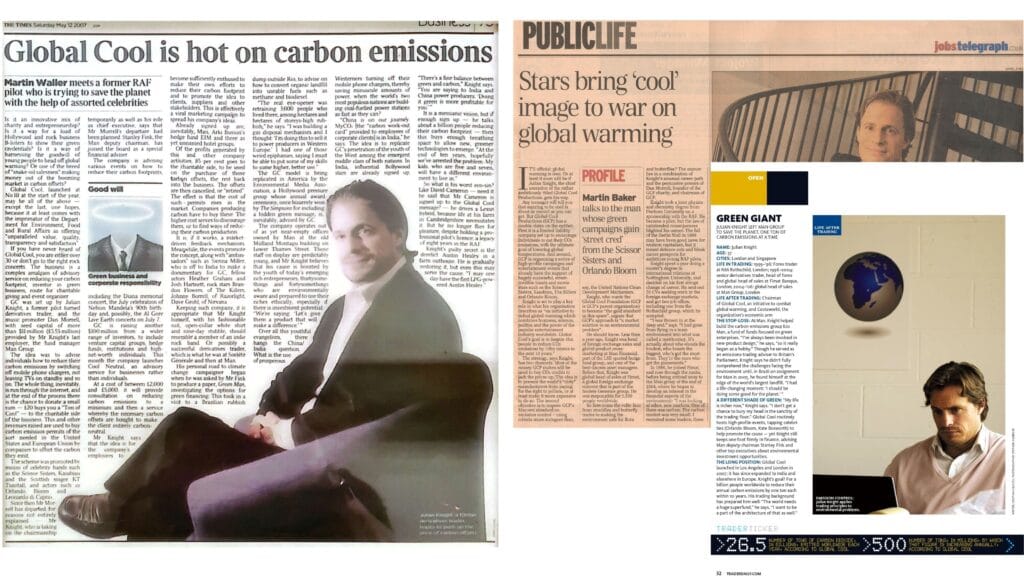
At Global Cool, the goal was to do something direct and structural: not just to talk about carbon, but to apply pressure to the system by influencing the value of carbon itself. The concept was straightforward in principle: reduce the availability of credits by purchasing and retiring them, and you start to tighten supply and make emissions more expensive.
This was never about “saving the world with a clever trick”. It was an acknowledgement that if carbon stays cheap, it stays easy to ignore. If carbon gets priced properly, investment starts to move.
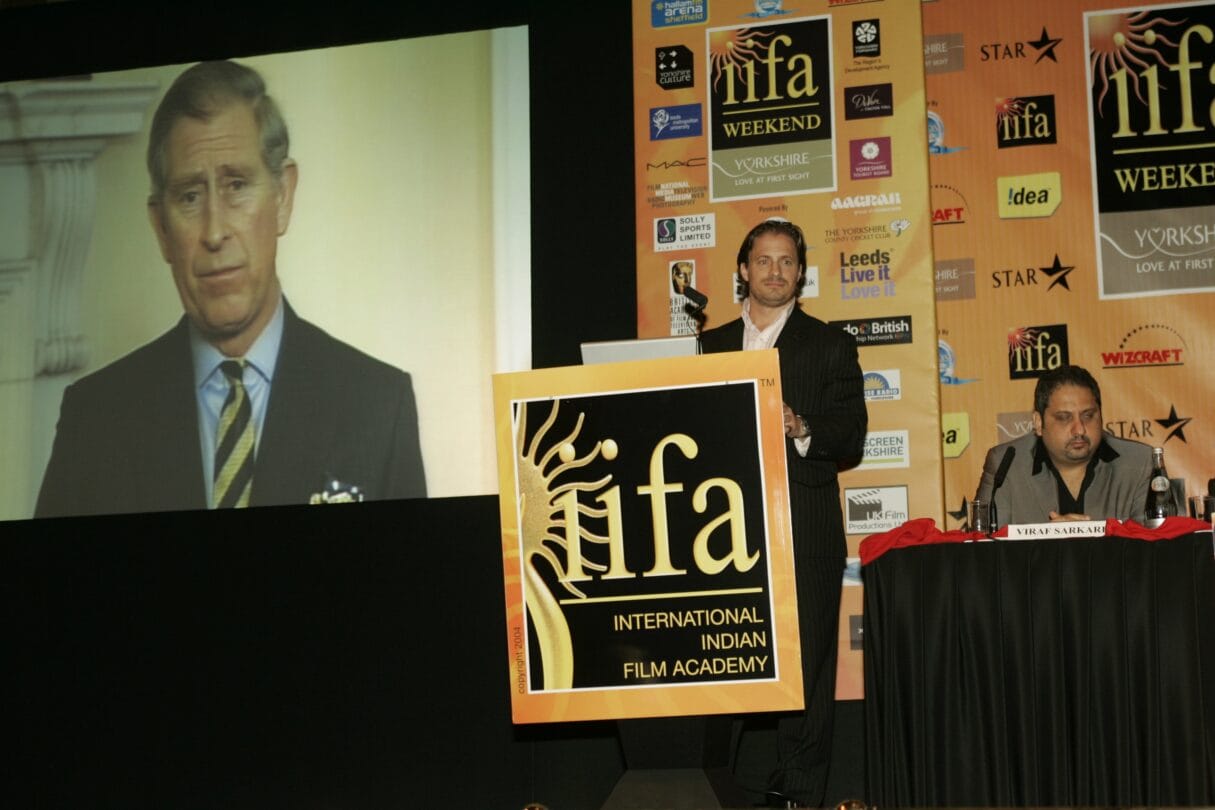
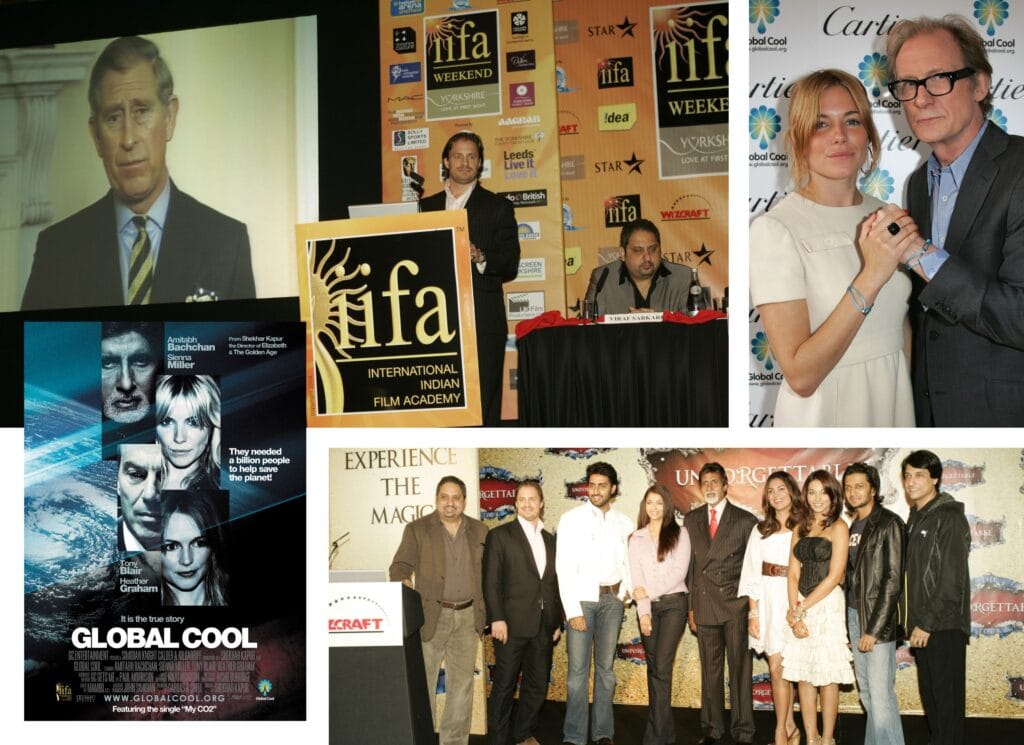
Alongside that, we worked hard on a second channel: making individual action feel doable. Not sanctimonious. Not performative. Practical steps that, aggregated across millions of people, could buy time for wider technological and industrial change. Global Cool worked with the Royal Household as well as Number 10 Downing St.
The credibility problem: not all projects are equal
If you work anywhere near offsets and carbon reduction projects, you learn quickly that the sector has a credibility problem. The temptation is always there to pick what looks best in a brochure. But reputational risk is real, and so is the damage done when low-quality projects undermine public trust.
So the discipline has to be higher than the marketing. You have to be rigorous about standards, governance, verification, and what you will not touch. You need to be able to say, plainly, that certain approaches are “nice stories” but weak instruments.
That insistence on quality is not pedantry. It is survival. If you want environmental finance to be more than a passing trend, it needs to behave like a serious market, with serious consequences for those who chance it.
The lesson I couldn’t unlearn: eventually you have to build
Over time, I came to a harder conclusion: even when environmental finance is well-designed, it often runs into the same wall.
Finance can create incentives. Finance can channel capital. Finance can accelerate adoption.
But finance cannot, on its own, create throughput.
If you want circularity, you need infrastructure. If you want emissions reductions that hold, you need operational capacity. If you want to move beyond “awareness”, you need machines, permits, logistics, uptime, and products that compete on quality and cost.
That is the point where my thinking shifted from “how do we fund climate outcomes?” to “how do we physically deliver them?”
Why Fairman Knight & Sons exists
Fairman Knight & Sons is an industrial biotechnology company building large-scale circular economy infrastructure. In practical terms, that means converting food waste into higher-value outputs sourced from Black Soldier Fly: protein, bio-oils, fertilisers, and biopolymers such as chitin and chitosan.
This is not climate theory. It is real asset deployment: engineering, biology, compliance, supply chains, and relentless iteration. It is the kind of work where good intentions are irrelevant unless they translate into stable operations and consistent outputs.
And there is something quietly important about that shift. When you build infrastructure, you stop arguing with the problem and start negotiating with reality: variability, regulation, community impact, and the limits of what can be scaled safely.
A personal takeaway for anyone working in climate
If I had to reduce my environmental career to one line, it would be this:
The world does not need more convincing. It needs more capacity.
We should keep improving markets, better standards, and better incentives. We should keep funding credible solutions and insisting on transparency. But we should also be honest: the next phase of climate work is practical. Industrial.
The work now is to build systems that can run for decades, not campaigns that peak for a season. To create assets that outperform the status quo, not arguments that hope it will step aside.
That is why I moved from financing climate outcomes to building them. Not because finance doesn’t matter, but because at some point, if you want the numbers to change, you have to build the machine that facilitates that shift.
About Julian Knight – CEO & Co-founder, Fairman Knight & Sons UK Limited
Julian Knight is a UK entrepreneur and environmental finance specialist with a career spanning capital markets, climate finance, and industrial-scale circular economy infrastructure.
He began his career in financial markets following early service in the RAF as a Pilot, moving into Foreign Exchange and Derivatives roles at Rothschild, Société Générale, and Man Group PLC, where he became Global Head of Sales Trading. He was the youngest ever Board advisor to the NY Board of Trade for his working with commodity markets. During this period, he was closely involved in the development of environmental finance strategies, including early work around carbon markets and sustainability-linked investment frameworks including Man Eco.
Julian went on to become Chief Executive Officer of Global Cool Productions, a pioneering environmental initiative wholly owned by his Hedge Fund, that combined capital markets, media, and behavioural change to address climate change at scale. Backed by major financial institutions and global public figures, Global Cool sought to mobilise one billion people to reduce carbon emissions, while also investing in carbon reduction projects and clean technologies.
Under his leadership, Global Cool developed innovative models linking investment returns with environmental impact, including large-scale live events, carbon credit strategies, and corporate carbon reduction programmes. The organisation worked with global brands, governments, and high-profile ambassadors to drive engagement and deploy capital into emissions reduction projects worldwide.
Julian also served as Senior Trustee of the Global Cool Foundation, helping guide its charitable and investment activities, and later founded CoolaWorld, a digital platform designed to incentivise sustainable consumer behaviour. The platform introduced mechanisms such as “cool credits,” allowing users to direct spending towards environmental projects, reflecting Julian’s long-standing focus on aligning financial systems with sustainability outcomes.
He is the Co-founder and Chief Executive Officer of Fairman Knight & Sons UK Limited, an industrial biotechnology company focused on large-scale Black Soldier Fly farming and bioproducts. Based in Lincolnshire, the company is developing advanced circular economy infrastructure, converting food waste into high-value outputs including protein, bio-oils, fertilisers, and biopolymers such as chitin and chitosan. The business represents a transition from environmental finance theory into real asset deployment and sustainable industrial production.
In addition to his commercial work, Julian is a Lincoln Climate Commissioner and serves on the Innovation Panel of the Greater Lincolnshire Climate Change Agency (GLCCA) as well as the Economic Advisory Panel (responsible for delivering Lincoln’s Growth Plan), contributing to regional strategy on decarbonisation, sustainable agriculture, and green industrial growth. He is also a member of the UK Food Valley Panel.
Julian holds a BSc (Joint Honours), an MA, and is a Fellow of the Royal Society of Arts (FRSA) and is an ALM (Authorised Lay Minister) in Lincoln Diocese.