What are chitin and chitosan? The natural materials behind Yasmine
Some of the most useful materials in nature are hiding in plain sight.
Chitin helps give structure to fungi, crustacean shells and insect exoskeletons. Chitosan, its closely related derivative, is already used and studied across agriculture, food production, water treatment, packaging and healthcare.
Black soldier flies bring this story into the circular economy. As their larvae grow, they shed chitin-containing skins. Rather than treating this material as waste, it can become the starting point for something new.
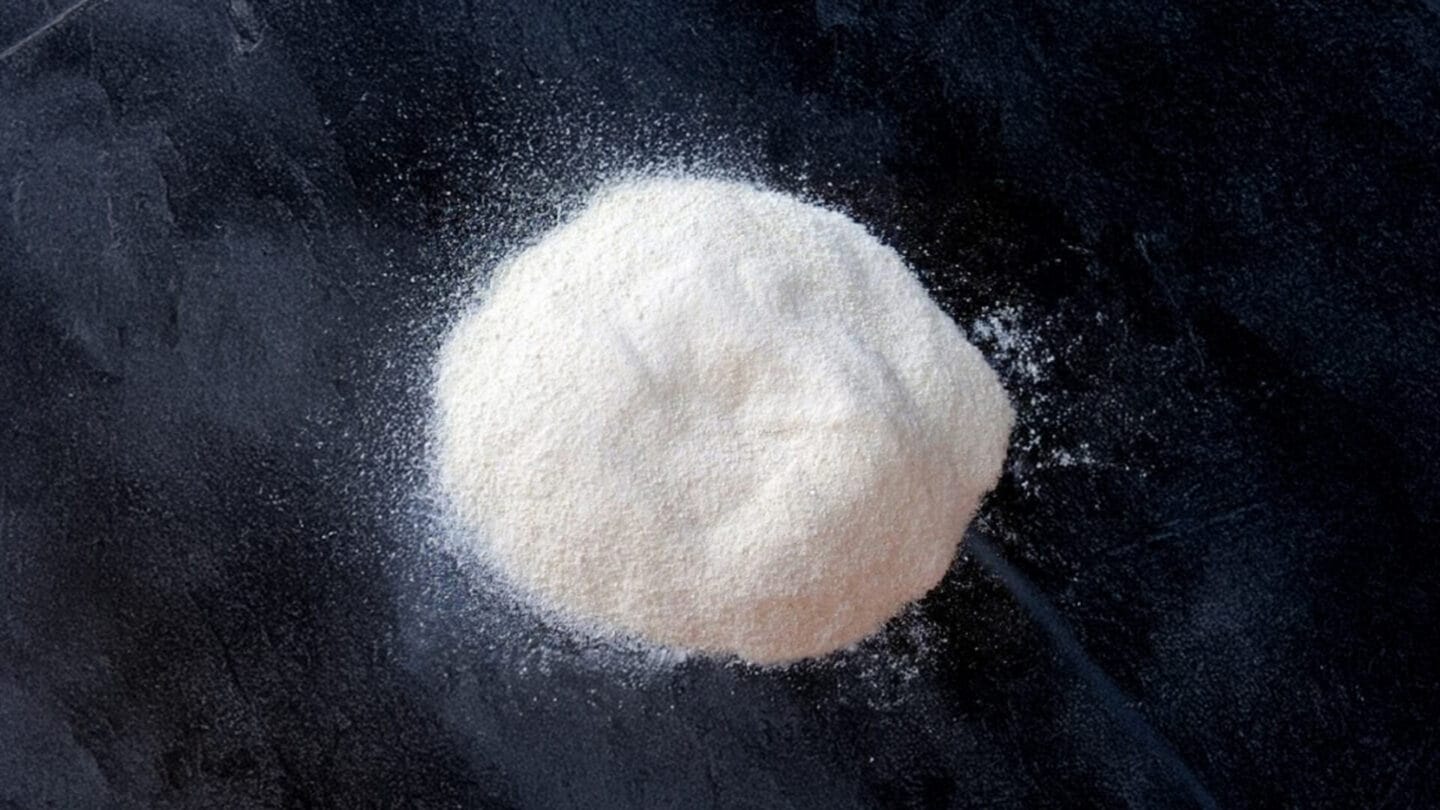
Yasmine is FKS’s chitosan product: chitin from black soldier fly material is converted through deacetylation to create chitosan with different, useful properties.
Here is the plain-English version.
First: what is chitin?
Chitin is a naturally occurring polysaccharide — a long chain of sugar molecules that living organisms use as a structural material. Think of it as one of nature’s building materials.
It is found in the cell walls of fungi and in the hard outer structures of many invertebrates, including crustaceans and insects. In black soldier flies, chitin forms part of the exoskeleton. As the larvae grow, they moult and leave their old skins behind.
Those shed skins provide a source of chitin within the black soldier fly system. The precise characteristics of the material can vary according to factors including the larvae’s diet, the production system and how it is processed and stored..
And what is chitosan?
Chitosan is made from chitin through a conversion called deacetylation. In simple terms, part of chitin’s molecular structure is changed, creating a related material with different properties.
That difference matters. Chitin is relatively difficult to dissolve, while chitosan is generally more reactive and can be soluble in mildly acidic conditions. Its behaviour also changes according to factors such as molecular weight and the degree of deacetylation.
So, although the words are often grouped together, they are not interchangeable. Chitin is the starting material; chitosan is the derivative created from it. Yasmine is the chitosan product that comes from that conversion.
Where the black soldier fly fit in
Most commercial chitin has traditionally come from shellfish-processing residues. Insects offer another potential source — and black soldier flies are especially interesting because they already sit inside a wider resource-recovery system.
At FKS, black soldier fly larvae convert surplus local food into valuable outputs. The larvae provide protein and bio-oil for animal and pet nutrition, while other materials from the process can be put to further use. Chitin recovered from black soldier fly material becomes the starting point for Yasmine.
It is a useful example of circularity going beyond waste reduction. One biological process can create several distinct materials, each with its own purpose and value.
Why is there so much interest in chitosan?Chitosan is attracting research and commercial interest because its properties make it relevant across a wide range of sectors.
Studies and product development have explored potential roles in areas including:
- agriculture and crop establishment
- seed, film and surface coatings
- food production and packaging
- water treatment and filtration
- healthcare and biomaterials
The detail matters, though. Performance depends on the source material, concentration, formulation, molecular weight, degree of deacetylation and intended application. Evidence from one chitosan formulation cannot automatically be treated as proof for every chitosan product or use.
That is why we separate promising science from proven product claims.
What does this mean for Yasmine?
Yasmine is FKS’s chitosan product, created by converting chitin from black soldier fly material through deacetylation.
This gives a naturally derived material a new purpose within a wider circular system. Instead of relying only on conventional shellfish sources, Yasmine demonstrates how insect biology can provide another route to chitosan while helping more value remain within the process.
Its potential lies in the properties of the finished chitosan and how these can be developed for specific applications. We will always describe those applications carefully, using product-specific evidence rather than borrowing claims from unrelated formulations or studies.
One source, two different materials
The simplest way to remember the difference is this:
- Chitin is a natural structural material found in insect exoskeletons, fungal cell walls and crustacean shells.
- Chitosan is a related material produced by converting chitin through deacetylation.
- Yasmine is FKS’s chitosan product, made by taking chitin from black soldier fly material through that conversion.
Both materials have significant potential. The opportunity is to understand them properly, use evidence carefully and develop applications that create genuine value from biology.