What is frass? The soil amendment made by black soldier flies
If you have read about Mouche Bouche, you will have come across the word frass. It is not marketing language, and it is not new. Frass is simply the natural material insects leave behind as they feed and grow. What is new is the scale, control and consistency with which we can now produce it.
At FKS, we turn surplus local food waste into high-value nutrition and soil health products using black soldier fly (BSF) biology. Frass is one of those products, and Mouche Bouche is how we bring it to fields, growers and gardens.
Here is the plain-English version.
So, what is frass?
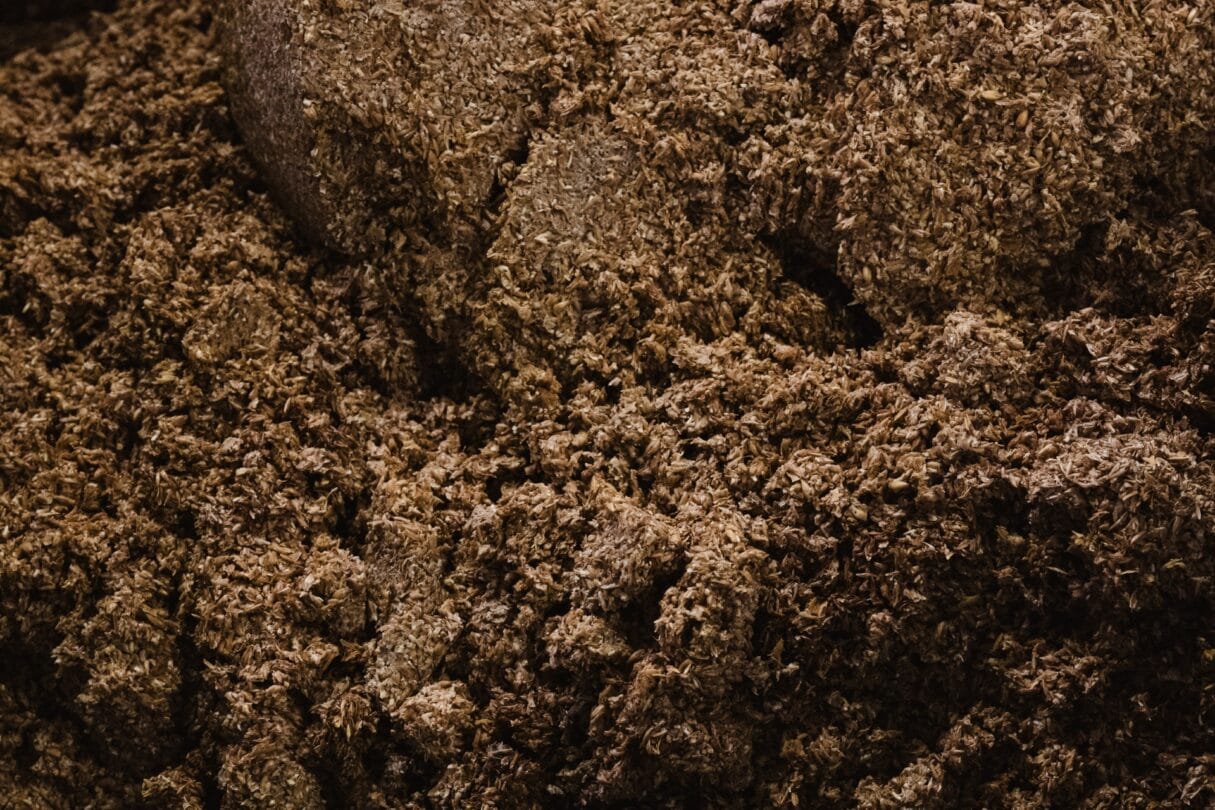
Frass is the residue insect larvae leave behind: digested organic matter, shed larval skins, and the remains of the substrate they have been fed on. In our case, black soldier fly larvae work through recycled surplus food waste inside a controlled facility.
The result is a dry, crumbly, earthy-smelling organic input. It is not a slurry, not a liquid feed, and not a synthetic fertiliser. It is closer to a very well-made compost with a few useful extras — which we come to below.
Where our frass comes from
Our frass is a by-product of bioconversion, which happens in five stages:
- Local surplus food waste, much of it rejected by supermarkets, arrives at our facility in Holbeach, in the UK Food Valley.
- We prepare and portion it as feed for black soldier fly larvae.
- The larvae convert that waste in a matter of days, in temperature- and humidity-controlled rooms.
- The larvae go on to become insect protein and bio-oil for animal and pet nutrition.
- What the larvae leave behind is frass, which we process, screen and pack as Mouche Bouche.
We handle roughly 40,000 tonnes of local food waste a year, and very little leaves the system as waste. That is what we mean when we talk about circular by design.
What is actually in it?
Mouche Bouche combines organic carbon with a range of nutrients, including nitrogen, phosphorus, potassium and calcium, alongside naturally occurring compounds such as chitin and a spread of trace elements. Because those nutrients and organic carbon are of biological origin, frass can sit within the definition of an organic fertiliser where its sole function is to provide plant nutrition. For Mouche Bouche, though, we use the safer and broader wording: biological soil amendment.
Chitin is the one worth pausing on. It comes from the larval skins, and it is the compound that has drawn the most research interest in relation to soil biology and plant resilience. We are careful with how we talk about it: the science is promising and still developing, and we would rather show you evidence than make a claim we cannot stand behind.
What frass does in the soil
The simplest way to think about it: mineral fertiliser feeds the plant, frass feeds the soil that feeds the plant.
With consistent use, frass can help support:
- Root development and establishment — healthier, more balanced rooting
- Soil structure — better aggregation and workability over time
- Water behaviour — improved infiltration and moisture retention, and less reliance on the hosepipe
- Microbial activity — organic matter and carbon to keep soil biology working
- Resilience under stress — heat, dry spells and transplant pressure
Outcomes vary by soil type, moisture, climate, crop and existing inputs. No soil amendment is a miracle input, and we would rather talk in specifics than generalities. If you want trial data for your system, tell us what you grow and what you are trying to achieve.
Frass is not a straight swap for fertiliser
A mineral fertiliser gives you a precise, fast, targeted dose of nutrients. Frass works differently, and more slowly. It builds the conditions that let a plant make better use of what is already there: structure, biology, water-holding and root access.
That is why we describe Mouche Bouche as a biological soil amendment rather than a synthetic substitute. It also keeps the wording clear: if we call frass an organic fertiliser, we should avoid stretching the same claim into biostimulant territory, such as stress resistance or plant-health promises, unless we have the supporting evidence. For many growers, frass and mineral fertiliser sit in the same plan rather than in opposition — the soil-first work reduces how hard everything else has to pull.
Using frass in the garden and in the field
Frass suits gardens of all shapes and sizes, from beds and borders to pots and vegetable plots. The golden rule: build it into the soil rather than feeding it on top.
- Mix it into the soil at planting, or blend it lightly into the top layer of established beds.
- In pots and containers, work it evenly through the potting mix rather than concentrating it in one spot.
- You can also use it as a top dressing. Keep it light, then water it in and let it integrate naturally.
- Reapply through the growing season as part of a steady soil care routine, rather than as a one-off treatment.
Application rate:
- 1 to 5% weight-by-weight of potting soil.
- Repeat applications are preferred over one heavy dose.
- Repeat every three to four weeks for the best results.
Less is more here. A light, even application goes further than a heavy hand, and soil life responds better to balance than to hotspots. Avoid the earlier 1:4 dilution guidance, which is equivalent to 25% and too aggressive for this use. Stay with 1 to 5% and build through repeat applications instead. With pots and young plants, start gently: a busy root system prefers a gradual introduction. Store the bag somewhere cool and dry between uses.
In the field and in horticulture, frass tends to earn its place where establishment, rooting and consistency matter most, and where soil condition has been under pressure from tight rotations or heavy traffic.
Why frass matters beyond the bag
Food waste is a problem with a cost attached: to the businesses producing it, to hauliers moving it, and to the atmosphere when it breaks down in the wrong place. Insect biology turns that problem into two things worth having — nutrition for animals, and nutrition for soil.
Doing this locally matters too. Waste produced in Lincolnshire is converted in Lincolnshire, and the value stays close to where it was created.
Mouche Bouche is our Black Soldier Frass: planet-smart nutrition for your soil, made from recycled local food waste.
If you are a grower, agronomist, distributor, retailer or gardener and you would like to talk trials, supply or the technical detail, we would like to hear from you.